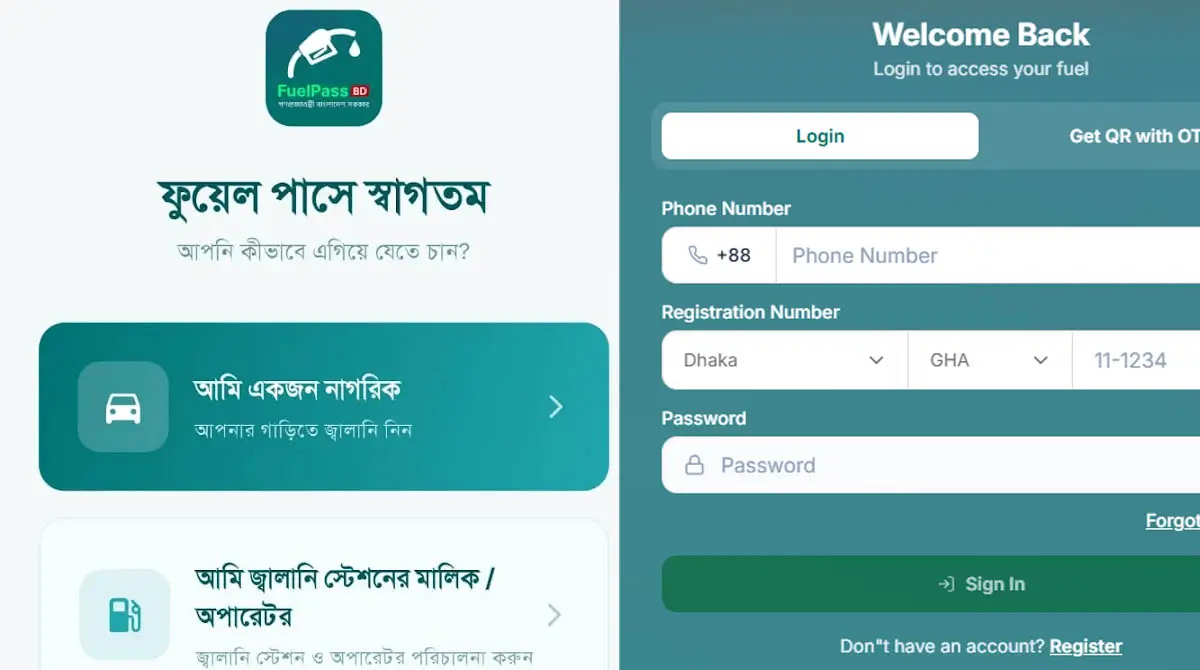
The government has started a new digital system called the Fuelpass Gov BD to manage fuel distribution more effectively. Its App and Web system is being tested in Dhaka city to reduce long queues and ensure fair fuel use. Drivers will now need to verify their information through a QR code before receiving fuel at selected stations.
Officials say this move will help stop misuse and improve transparency in the fuel supply chain. The pilot project has already begun at two filling stations in the capital, and thousands of users have registered within a short time. If the trial is successful, the system will be expanded across the country.
The Fuel Pass Gov BD system is introduced to bring discipline and control in fuel distribution. It uses a QR code–based system where each registered vehicle gets a specific fuel allocation. This helps prevent people from taking more fuel than needed.
The initiative is currently being tested at two petrol pumps in Dhaka—Sonar Bangla Filling Station at Asad Gate and Trust Filling Station in Tejgaon. At this stage, motorcycle users are the main focus. Authorities plan to expand it to all vehicles in phases.
This system is connected with the BRTA database, which ensures accurate vehicle information. It also allows real-time monitoring through a central dashboard. As a result, both users and officials can track fuel usage easily.
To use the Fuel Pass system, users must complete an online registration process. This can be done through the official website or mobile app. The process requires basic vehicle and personal information for verification.
| Requirement | Details |
|---|---|
| Website | fuelpass.gov.bd |
| App Name | Fuel Pass |
| Required Documents | NID, vehicle registration |
| Vehicle Info | Registration, engine, chassis number |
| Mobile Number | Active phone number needed |
| Verification | OTP required |
| User Type | Citizen or Fuel Station Owner |
| QR Code | Generated after registration |
A digital verification method designed for transparency.
The Fuel Pass system works through a digital verification method. After registration, each user receives a QR code linked to their vehicle details. This code must be shown at the fuel station during purchase.
When a driver arrives at a participating pump, the operator scans the QR code. The system then checks the fuel allocation assigned to that vehicle. Only the allowed amount of fuel can be purchased.
This process ensures that no one can take extra fuel by standing in line multiple times. It also reduces waiting time and helps manage supply better. Through the central monitoring system, authorities can track fuel distribution across the country.
The system also helps identify unusual activity. For example, if a vehicle tries to collect fuel more than its limit, it will be flagged. This adds an extra layer of control and transparency.
To make the process easier, the government has designed a simple step-by-step registration system. Users can complete everything online without visiting any office. Below are the steps to register for the Fuel Pass system.
First, go to the official website or download the Fuel Pass app from the Play Store. Both platforms offer the same registration process.
Provide your vehicle registration number, engine number, and chassis number. These details must match the BRTA database.
Add your National ID number and vehicle details. Then click on the “Verify Vehicle” option to confirm the information.
Enter your active mobile number. You will receive an OTP code for confirmation. This step ensures secure registration.
After OTP verification, set a password and complete your profile. Your QR code will be generated after successful registration.
Digital convenience for citizens and operators.
The Fuel Pass app is designed for both vehicle owners and fuel station operators. It is available on the Google Play Store and easy to use. After installation, users can choose their role and log in.
For citizens, the app shows vehicle details and fuel allocation limits. Users can check daily, weekly, and monthly fuel quotas directly from the dashboard. The QR code is also available in full-screen mode for easy scanning.
The app also keeps a history of fuel purchases. This helps users track how much fuel they have taken and from which station. It adds convenience and improves transparency for everyone.
Fuel card registration is another part of the digital system. Though it is not a physical card, the QR code acts like a digital fuel card. It stores all user and vehicle information.
To register, users must provide valid documents such as NID, driving license, and vehicle registration papers. A passport-size photo may also be required during the process.
Even users without smartphones can benefit. They can register through the website and print their QR code. This ensures that all citizens can use the system without difficulty.
The goal is to replace manual systems with a digital method. This will reduce errors and make fuel distribution faster and more reliable.
Users must follow certain guidelines while using the Fuel Pass system. First, always ensure that your registration information is correct. Any mismatch may cause delays during fuel collection.
Carry your QR code when visiting a fuel station. If you use a smartphone, keep the app ready. If not, bring a printed copy of the QR code.
Do not try to collect fuel beyond your allocated limit. The system will not allow extra fuel, and repeated attempts may lead to restrictions. Always follow the assigned quota.
Fuel station operators also depend on accurate scanning. So, make sure your QR code is clear and readable. This will help avoid any issues during the process.
Find detailed answers to all your questions below.
It is a QR code–based system for managing fuel distribution in Bangladesh.
It is being tested at two filling stations in Dhaka.
Currently, motorcycle owners can register during the pilot phase.
Yes, users need the app or printed QR code to collect fuel.
You need NID, vehicle details, and a mobile number.
Yes, you can print the QR code after registering online.